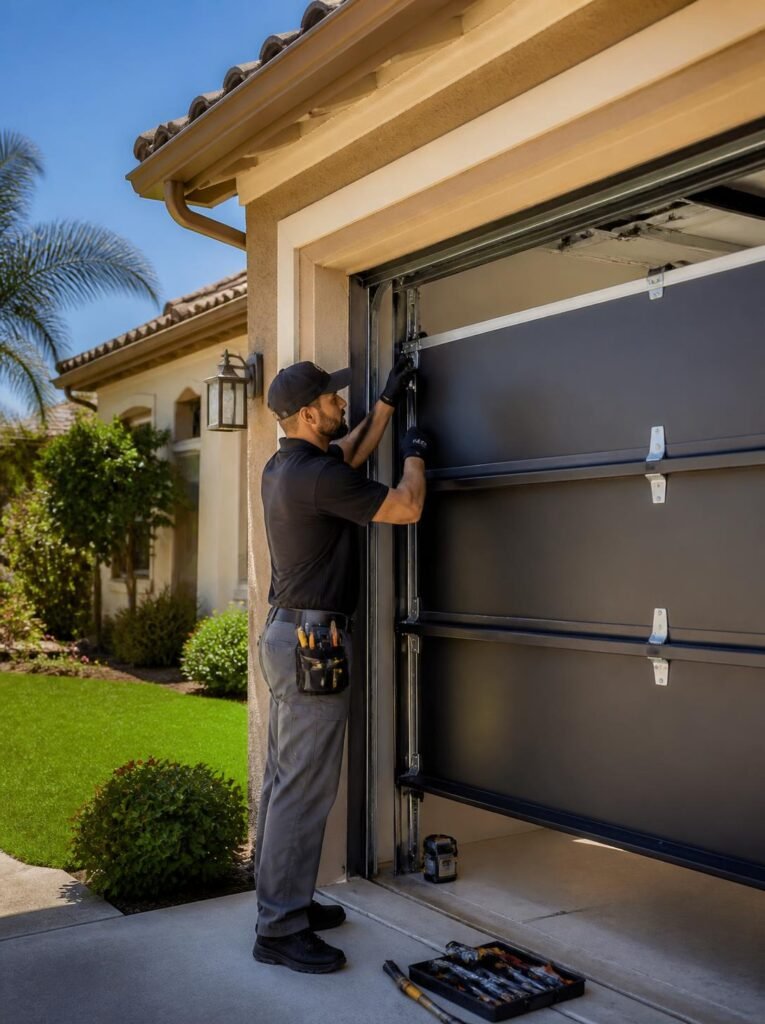
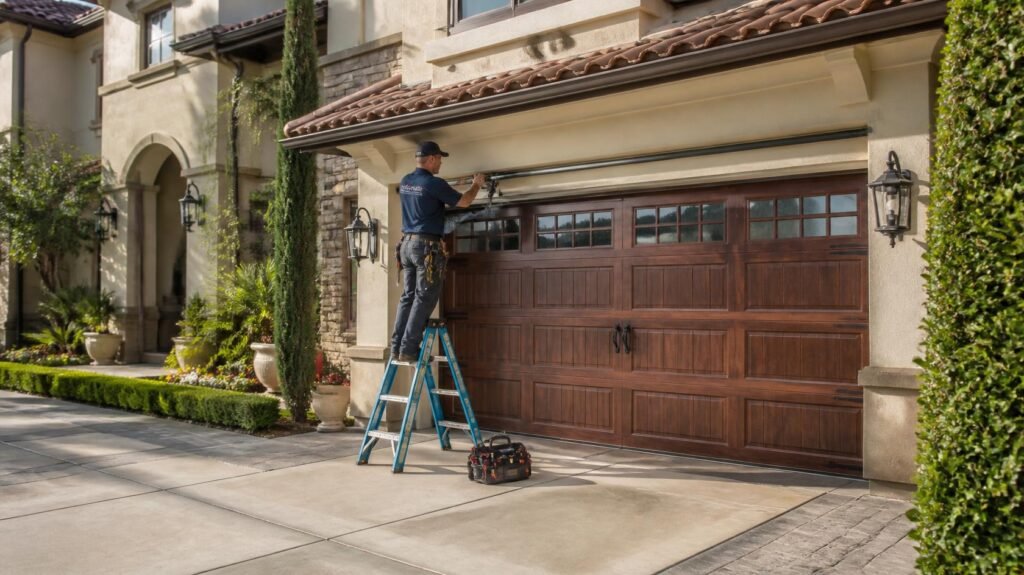
A garage door should open smoothly, close securely, and respond reliably whenever you need it. When something goes wrong, even a minor issue can quickly become a safety concern or leave your vehicle trapped inside. For homeowners and property managers, recognizing the early warning signs can help prevent further damage and determine when professional Garage Door Repair Sacramento services may be necessary.
Garage door problems can develop gradually or appear without warning. A door may start making unusual noises, move unevenly, reverse before closing, or stop responding to the opener. Other problems, such as a broken spring or damaged lifting cable, can make the door unsafe to operate.
Understanding these symptoms helps you make informed decisions about maintenance, repairs, and replacement. It also helps you recognize when a problem is safe to check yourself and when a trained technician should handle it.
BMS Automatic Gates and Garage Doors provides a local point of contact for homeowners seeking information about garage door repair in Sacramento, CA. This guide explains seven common warning signs, possible causes, safe troubleshooting steps, and situations that may require urgent professional attention.
1. Your Garage Door Makes Unusual Noises
A properly maintained garage door generally operates with consistent, predictable sounds. If your door suddenly becomes louder, starts grinding, or produces repeated popping noises, it may be developing a mechanical problem.
Not every sound indicates a serious fault. However, a new or increasingly loud noise deserves attention, particularly when it occurs alongside changes in how the door moves.
Common garage door noises and what they may mean
Squeaking or squealing: These sounds may come from rollers, hinges, or other moving components that need maintenance. Worn rollers or incorrect lubrication can also contribute to noise.
Grinding: Grinding may indicate damaged rollers, track alignment problems, worn bearings, or an opener mechanism that is struggling to move the door.
Banging or popping: A sudden bang can sometimes indicate a broken garage door spring. Other components can also produce sharp noises, so the sound alone cannot confirm the cause.
Rattling: Loose hardware, vibrating panels, or worn components may create rattling sounds during operation.
Straining motor: If the opener hums, labors, or repeatedly stops while moving the door, the door may be binding or the opener may have a mechanical or electrical problem.
What should you do?
Start by observing the door from a safe distance while it operates normally. Notice whether the sound occurs during opening, closing, or throughout the entire cycle.
Do not touch moving rollers, attempt to tighten components connected to spring systems, or continue operating a door that appears unstable.
If the noise persists, a qualified technician can inspect the rollers, hinges, tracks, springs, and opener to identify the underlying issue.
Addressing unusual noises early may help prevent a relatively minor maintenance problem from developing into a more expensive repair.
2. Your Garage Door Opens Slowly or Moves Unevenly
A garage door that opens more slowly than usual, jerks during movement, or appears crooked may have a problem with its lifting mechanism or track system.
Residential garage doors are heavy. Springs counterbalance much of the door’s weight, while rollers travel through tracks to guide the door along its intended path. The opener provides movement, but it is not designed to compensate for every mechanical fault.
When one part of the system stops working correctly, the entire door may behave differently.
Possible causes of uneven movement
- Worn rollers: Damaged rollers may not travel smoothly through the tracks.
- Misaligned tracks: Bent or improperly aligned tracks can cause friction and uneven movement.
- Spring problems: A damaged or weakened spring can prevent the door from lifting evenly.
- Cable damage: A frayed or displaced lifting cable may affect how the door is supported.
- Opener problems: Motor, drive, or control issues can cause slow or inconsistent operation.
- Obstructions: Debris or objects interfering with the door’s path may prevent normal movement.
These are possible explanations, not a confirmed diagnosis. A technician needs to inspect the door system to determine which component is responsible.
Why an uneven garage door needs attention
A crooked door may place additional stress on rollers, tracks, cables, and the opener. If the door becomes increasingly unbalanced, it may jam or come out of its intended path.
Stop using the door if it tilts noticeably, appears unstable, or makes sudden movements.
For persistent problems, arrange a professional inspection rather than repeatedly cycling the opener in an attempt to force the door through its movement.
Learn more about garage door repair services in Sacramento if your door no longer operates smoothly.
3. Your Garage Door Will Not Open or Close Properly
A garage door that refuses to open or close can interrupt your daily routine and create a security concern. The cause may be as simple as a power interruption or blocked sensor, but it can also involve the opener, springs, cables, or door mechanism.
The first step is to identify exactly what happens when you operate the door.
The opener makes a sound, but the door does not move
If the motor runs but the door remains stationary, the problem may involve the drive mechanism, trolley, connection arm, or another mechanical component.
A disconnected opener can also produce this symptom. However, do not attempt to reconnect the mechanism if the door is crooked, unusually heavy, or showing signs of spring or cable failure.
The door begins moving and then stops
A door that starts to open before stopping may be encountering resistance. Possible causes include track problems, an unbalanced door, damaged rollers, or an opener fault.
Repeatedly pressing the remote may worsen the problem if the mechanism is already under strain.
The door closes and then reverses
Photoelectric safety sensors, also called photo eyes, help detect objects in the door’s path. If the sensors are blocked, misaligned, or experiencing a wiring problem, the opener may refuse to close the door or reverse its movement.
Other causes can include mechanical resistance, incorrect travel settings, or a problem with the opener’s safety system.
Never bypass a safety sensor to force the door to close.
The remote control does not work
A depleted remote battery, an electrical interruption, interference, or a receiver problem may prevent the opener from responding.
Check the remote battery and confirm that the opener has power. If the wall-mounted control works but the remote does not, the issue may be limited to the remote or its signal.
If neither control works, additional inspection may be necessary.
For opener-specific problems, visit the Garage Door Opener Repair Sacramento service page.
4. You Suspect a Broken Garage Door Spring
A broken garage door spring is one of the most important warning signs to recognize because springs help counterbalance the door’s weight.
Many residential garage doors use torsion springs mounted above the door opening. Other systems use extension springs positioned alongside the horizontal tracks.
Both types store mechanical energy. When a spring breaks or loses its ability to support the door properly, the door may become difficult or dangerous to operate.
Signs of garage door spring failure
Watch for the following symptoms:
- A sudden, loud bang from the garage.
- A visible gap in a torsion spring above the door.
- A garage door that suddenly feels unusually heavy.
- An opener that struggles to lift the door.
- A door that rises only a short distance before stopping.
- A door that appears uneven during movement.
- A visibly stretched, damaged, or displaced spring component.
A loud bang alone does not prove that a spring has broken. Likewise, not every spring failure produces an obvious sound.
Why spring problems are dangerous
Garage door springs are designed to store and release substantial energy. Improperly loosening, winding, or removing them can cause serious injuries.
A door with a broken spring may also fall or move unexpectedly because the counterbalance system is no longer supporting its weight correctly.
Do not attempt to adjust or replace a torsion spring yourself. Do not pull on spring components, loosen spring brackets, or try to compensate for the failure by using the opener repeatedly.
Keep children and pets away from the door and arrange professional assistance.
For more information, visit the Garage Door Spring Repair Sacramento service page.
5. Your Garage Door Is Off Track or Has Damaged Rollers
Garage door tracks guide the rollers as the door opens and closes. When a roller comes out of its track or a track becomes bent, the door may no longer move along its intended path.
An off-track door is not simply a noisy door. Depending on the extent of the damage, it can become unstable and may fall or place excessive force on other components.
Warning signs of an off-track garage door
- One side of the door hangs lower than the other.
- A roller appears outside its track.
- The door has a visible gap along one side.
- The track appears bent or separated from its mounting points.
- The door stops abruptly during movement.
- The door panels look twisted or misaligned.
- The opener struggles while the door moves unevenly.
What can cause track problems?
A track can become damaged through accidental impact, loose mounting hardware, worn rollers, or long-term wear. An obstruction or an existing balance problem may also contribute to abnormal movement.
In some cases, the original issue may involve a different component. For example, a damaged cable or spring can cause the door to move unevenly and place additional stress on the track system.
A visual inspection by a technician can help establish the actual cause.
What should you do if the door comes off track?
Stop operating the opener immediately.
Do not attempt to push the door back into the track, lift one side manually, or remove rollers while the door is under tension. A heavy door can shift unexpectedly, particularly if a cable or spring is also damaged.
Keep the surrounding area clear and arrange a professional inspection.
Depending on the damage, the technician may need to assess the rollers, track alignment, mounting hardware, cables, springs, and door panels before determining the appropriate repair.
6. Your Garage Door Reverses, Closes Incompletely, or Has Sensor Problems
Safety systems are an essential part of modern automatic garage door operation. If your door reverses unexpectedly or refuses to close, the issue should not be dismissed as a minor inconvenience.
One common component is the photoelectric sensor system. These sensors are generally installed near the bottom of the door opening and create a beam across the opening. If the beam is interrupted, the opener’s safety logic should respond according to the manufacturer’s design.
Common reasons a garage door reverses
Blocked sensors: Dust, stored items, or other obstructions may interrupt the sensor beam.
Misaligned sensors: A sensor may have shifted, preventing the two units from communicating correctly.
Wiring problems: Damaged wiring or loose connections can interfere with sensor operation.
Mechanical resistance: A binding door, damaged rollers, or track problems may cause the opener to reverse.
Opener settings or faults: Incorrect travel settings or a malfunctioning control system may also contribute.
Safe checks homeowners can perform
With the door stationary, inspect the sensor area from a safe position.
- Remove objects blocking the sensor beam.
- Wipe visible sensor lenses gently with a soft, dry cloth.
- Check whether the sensor housings appear visibly displaced.
- Look for obvious external damage without removing covers or disturbing wiring.
- Consult the opener manual for model-specific indicator lights and troubleshooting instructions.
Do not bypass the sensors, alter their wiring, or force the door to close.
If the door continues reversing after simple obstructions are removed, arrange an inspection. A safety system that does not function correctly should be treated as a repair issue.
The Door & Access Systems Manufacturers Association provides additional information in its garage door safety guidance.
7. Your Garage Door Has Visible Damage or No Longer Seals Properly
Physical damage can affect more than the appearance of a garage door. Cracked panels, bent tracks, worn weatherstripping, and damaged bottom seals may reduce the door’s ability to operate smoothly or protect the garage interior.
Sacramento homeowners may notice seal deterioration after prolonged exposure to sunlight, changing temperatures, moisture, and everyday use. The actual rate of wear depends on the door material, installation, exposure, and maintenance.
Common signs of physical deterioration
Cracked or dented panels: Minor cosmetic damage may not prevent operation, but severe damage can affect the door’s structural integrity.
Worn weatherstripping: A deteriorated seal can allow dust, water, insects, and outside air to enter around the door.
Damaged bottom seal: A split or flattened seal may no longer sit evenly against the garage floor.
Bent tracks or brackets: Damaged supporting hardware can interfere with the door’s movement and stability.
Loose or separated components: Visible movement in mounting points or hardware may indicate a need for professional inspection.
Excessive daylight around the closed door: Uneven gaps can suggest a worn seal, an uneven floor, door misalignment, or a door that no longer closes correctly.
Repair or replacement?
The appropriate solution depends on the severity and location of the damage.
A worn weather seal may need only replacement. A damaged panel might be repairable if compatible parts are available and the rest of the door remains in good condition.
However, extensive panel damage, repeated mechanical failures, structural deterioration, or a door that no longer operates safely may justify considering replacement.
For homeowners evaluating a new door, BMS provides information about Garage Door Installation Sacramento.
Common Causes of Garage Door Problems
The seven warning signs above can result from several underlying issues. Understanding the major components can help you describe the symptoms accurately when requesting service.
Worn rollers and hinges
Rollers guide the door through the tracks, while hinges connect individual door sections. Wear, damage, and insufficient maintenance can cause noise, vibration, and uneven movement.
Rollers and hinges should be inspected and maintained according to the manufacturer’s recommendations. Damaged components should be evaluated before continued operation.
Broken or weakened springs
Springs counterbalance the door so that the opener does not have to lift its full weight. Over time, springs can fatigue and eventually fail.
A weakened spring may affect door balance before it breaks completely. Because spring systems operate under high tension, inspection and replacement should be handled by a qualified technician.
Frayed or broken lifting cables
Lifting cables work with the counterbalance system to help raise and lower the door evenly. A frayed cable may fail under load, potentially causing the door to become crooked or unstable.
Never pull, adjust, or replace a damaged cable yourself. Even when the door is closed, components may remain under substantial tension.
Misaligned or damaged tracks
Tracks can become bent, obstructed, or displaced. These problems can prevent the rollers from moving smoothly and may put additional stress on the door.
Track alignment should be evaluated alongside rollers, brackets, cables, and the door’s balance. Adjusting a track without identifying the cause may not resolve the underlying issue.
Garage door opener malfunction
The opener includes electrical and mechanical components that control door movement. Depending on the model, a problem may involve the motor, drive assembly, trolley, receiver, controls, wiring, or travel settings.
An opener fault should be distinguished from a door that has become difficult to lift because of a spring, track, or roller problem.
Replacing the opener without checking the door’s mechanical condition may leave the original issue unresolved.
Photo-eye sensor problems
Sensors can be affected by obstructions, alignment, wiring, or component failure. Because they are part of the entrapment-protection system, faults should be corrected rather than bypassed.
Poor maintenance or accidental impact
Everyday use can gradually wear components. A vehicle striking a door, an object blocking the track, or a lack of appropriate maintenance may also contribute to a malfunction.
A technician can determine whether the problem is limited to one part or involves several connected components.
Garage Door Troubleshooting: Symptoms, Possible Causes, and Recommended Actions
The following table can help you identify what to report when contacting a garage door repair company. The listed causes are possibilities, not definitive diagnoses.
| Symptom | Possible cause | Recommended action |
|---|---|---|
| Door makes a loud bang and will not lift | Broken spring or another mechanical failure | Stop operating the door and arrange professional inspection |
| Door opens unevenly | Cable, spring, roller, or track problem | Stop use if the door is crooked or unstable |
| Opener runs but door does not move | Drive mechanism, trolley, or connection problem | Avoid repeated operation; request diagnosis |
| Door reverses while closing | Obstructed sensors, alignment issue, mechanical resistance, or opener fault | Check for simple obstructions; never bypass safety sensors |
| Remote does not work | Weak battery, interference, or receiver issue | Check the battery and test the wall control |
| Grinding or scraping sound | Worn rollers, damaged track, or another mechanical fault | Stop use if movement is abnormal; arrange inspection |
| Door is stuck halfway | Obstruction, spring or cable issue, or opener fault | Keep clear of the door and do not force it |
| Door has gaps at the bottom | Worn seal, uneven floor, or alignment issue | Inspect the visible seal and arrange repair if needed |
| Door closes but immediately opens again | Sensor interruption, travel settings, or resistance | Check the sensor area and consult the opener manual |
| Visible frayed cable | Cable wear or damage | Do not touch or operate the door; call a technician |
This guide helps identify potential causes, but a physical inspection is necessary to confirm the fault and determine which repair is appropriate.
Safe Garage Door Troubleshooting Homeowners Can Perform
Some garage door issues can be checked without dismantling equipment. The key is to limit troubleshooting to simple observations and manufacturer-approved procedures.
If the door is crooked, hanging, unusually heavy, or showing signs of spring or cable failure, skip troubleshooting and arrange professional assistance.
1. Check the power supply
If the opener does not respond, confirm that the garage has power and that the opener is connected to its normal power source.
If the circuit breaker has tripped, follow ordinary electrical safety precautions and the manufacturer’s instructions. Do not repeatedly reset a breaker that continues to trip, and do not open electrical housings or attempt wiring repairs.
2. Inspect the remote control
Replace the remote’s battery if necessary. If the wall-mounted control operates the door but the remote does not, the remote or its signal may be the problem.
Consult the manufacturer’s manual before attempting to reprogram the remote.
3. Look for obvious obstructions
Check the floor and the visible path of the door for objects that could prevent movement.
Do not reach into the track, touch moving parts, or remove an obstruction if doing so requires placing your hands beneath a door that may move unexpectedly.
4. Inspect the photo-eye sensor area
Look for dust, objects, or visible displacement around the sensors.
You can clean the outside of a sensor lens gently, but avoid opening the housing or disturbing electrical connections. If the problem persists, the system may need professional adjustment or repair.
5. Look at the door from a safe distance
With the door stationary, look for obvious signs of damage, such as a gap in a spring, a visibly frayed cable, a bent track, a loose panel, or a roller outside its track.
Do not touch damaged components or attempt to straighten them.
6. Review the owner’s manual
Garage door openers differ by manufacturer and model. The manual may explain indicator lights, remote troubleshooting, normal operation, and the correct procedure for obtaining service.
Use the instructions for your particular equipment rather than applying adjustment steps intended for a different opener.
7. Know when to stop
If basic checks do not resolve the issue, stop troubleshooting. Repeatedly activating the opener can place additional stress on damaged components.
Never dismantle a spring system, loosen cable brackets, bypass safety devices, or attempt to lift a visibly unstable door.
Garage Door Spring and Cable Safety: What Every Homeowner Should Know
Garage door springs and cables deserve special attention because their failure can create serious hazards.
How the spring system works
A residential garage door can weigh enough to make manual lifting difficult or unsafe. The counterbalance springs help offset that weight, allowing the door to move more smoothly.
Torsion springs typically use twisting force, while extension springs stretch as the door moves. Both designs store mechanical energy.
When a spring breaks, the door may lose much of its counterbalance. The opener may struggle, and the door may move unpredictably.
Why cables require professional attention
Cables connect parts of the lifting system and help maintain balanced movement. When a cable frays, slips, or breaks, the door may tilt or become unstable.
Even a cable that appears loose can be associated with tension elsewhere in the system. Do not pull on it or try to put it back in place.
What not to do
- Do not wind or unwind torsion springs.
- Do not loosen spring cones, brackets, or bottom fixtures.
- Do not replace frayed or broken lifting cables.
- Do not use improvised tools to adjust spring tension.
- Do not attempt to lift a crooked or unstable door.
- Do not allow children or pets near a damaged door.
- Do not continue using the opener to compensate for a broken spring.
If you suspect spring or cable failure, keep people away from the garage door and arrange service.
The Door & Access Systems Manufacturers Association advises homeowners to have worn or damaged spring and cable components assessed by trained professionals. Its garage door safety tips provide additional maintenance and inspection guidance.
When Is Emergency Garage Door Repair Necessary?
Not every garage door malfunction requires immediate emergency service. However, certain conditions warrant prompt attention because they may pose a safety risk or leave a property unsecured.
Situations that may require urgent service
A door is hanging unevenly or appears ready to fall. Stop using it and keep people away from the opening.
A spring has broken. The door may no longer be safely counterbalanced.
A lifting cable has snapped or come loose. Continued operation may cause further instability.
The door is stuck open and the property cannot be secured. Prompt repair may be important for security and weather protection.
A vehicle is trapped inside and the door cannot operate safely. Explain the situation when contacting a repair provider, but do not force the door open.
The door has been struck by a vehicle. Impact can damage tracks, panels, cables, and supporting hardware, even if the damage initially appears minor.
The door will not close because of a persistent safety-system fault. Do not bypass the sensors to secure the opening.
What to do while waiting for help
Keep the affected area clear. Do not stand beneath a suspended or crooked door, and do not attempt to release the opener manually if the door may be unbalanced.
If the door is stuck open, avoid leaving valuable items exposed and use another secure entrance if available.
Tell the repair company what happened, whether the door is open or closed, what sounds it made, and whether you can see any obvious damage.
For service information, visit the Emergency Garage Door Repair Sacramento page.
Contact BMS Automatic Gates and Garage Doors at 916-891-1804 to discuss the problem and ask about service availability. Do not assume that emergency or same-day service is available until the company confirms it.
Residential Garage Door Repair: Repair or Replace?
Deciding whether to repair or replace a garage door involves more than comparing the immediate repair cost with the price of a new door.
The condition of the existing door, the extent of the damage, the availability of compatible parts, and the expected cost of future maintenance all matter.
When repair may make sense
Repair may be appropriate when the door is structurally sound and the problem is limited to a serviceable component.
Examples include:
- Replacing a worn bottom seal.
- Repairing a compatible opener component.
- Replacing damaged rollers.
- Correcting a repairable track problem.
- Replacing a failed spring or damaged cable.
- Addressing a sensor or control problem.
The technician should inspect related components to determine whether the problem has caused additional damage.
When replacement may be worth considering
Replacement may be the better long-term option when the door has extensive structural damage, repeated failures, serious corrosion, or parts that are difficult to source.
A replacement may also make sense if the current door does not meet your needs for insulation, appearance, security, or daily operation.
However, age alone does not automatically mean a garage door needs replacement. The actual condition and repair options should guide the decision.
Compare the options
| Consideration | Repair | Replacement |
|---|---|---|
| Structural condition | Door remains sound | Door is extensively damaged or deteriorated |
| Nature of the problem | One or a few repairable components | Multiple major problems or recurring failures |
| Parts availability | Compatible parts are available | Essential parts are unavailable or impractical to source |
| Initial expense | Often lower for a limited fault | Generally involves a larger upfront investment |
| Long-term planning | Suitable when the remaining system is serviceable | May suit owners planning a broader upgrade |
| Appearance and insulation | Existing design remains | Opportunity to select a different design or insulation level |
Ask for a written estimate that identifies the problem, proposed work, parts, labor, and any applicable warranty terms. Compare repair and replacement recommendations on their merits rather than assuming one option is always better.
For installation information, visit Garage Door Installation Sacramento.
How to Choose a Garage Door Repair Company in Sacramento
Choosing a repair provider is an important part of protecting your property and ensuring the work addresses the actual fault.
Before authorizing work, ask questions that clarify the diagnosis, cost, safety implications, and scope of the repair.
Questions worth asking
1. What do you believe is causing the problem?
Ask the technician to explain the observed symptoms and the evidence supporting the diagnosis. A clear explanation helps you understand why a particular repair is recommended.
2. What work is necessary to restore safe operation?
Ask which components need attention and whether related parts require inspection. This is especially important when a broken spring, damaged cable, or off-track door may have affected other components.
3. Can I receive a written estimate before work begins?
The estimate should explain the proposed repair and expected charges. Ask whether additional work would require your approval.
4. Are the replacement parts compatible with my door?
Springs, rollers, cables, and opener components must be suitable for the door system. Ask the technician to explain any important compatibility considerations.
5. What warranty applies to the repair or replacement parts?
Warranty terms vary by provider and component. Request the actual terms in writing rather than relying on general statements.
6. Are you appropriately qualified and insured for this work?
Ask about relevant experience, licensing requirements where applicable, and insurance. Verify information when necessary.
7. How soon can you inspect the door?
If the door is stuck open, unstable, or preventing access to your vehicle, explain the urgency. Ask the company to confirm its availability and any additional charges for urgent service.
8. Will you test the door and safety systems after the repair?
The door should be checked according to the manufacturer’s instructions and applicable safety requirements. Ask what testing will be performed before the job is considered complete.
9. What maintenance should I perform afterward?
Ask which parts require routine observation, what lubrication the manufacturer recommends, and which warning signs should prompt another inspection.
These questions help you compare service providers based on transparency, safety, and the suitability of the proposed repair.
To learn more about BMS Automatic Gates and Garage Doors, visit the About Us page.
Frequently Asked Questions About Garage Door Repair in Sacramento
1. What are the most common signs that a garage door needs repair?
Common warning signs include unusual noises, slow or uneven movement, a door that will not open or close, broken springs, frayed cables, damaged tracks, malfunctioning sensors, and visible panel damage. Stop using the door if it appears unstable or unsafe.
2. Can I open my garage door if the spring is broken?
You should not attempt to operate a garage door with a suspected broken spring. The door may be extremely heavy or poorly balanced, and the opener may not be capable of lifting it safely. Arrange professional inspection and repair.
3. Why does my garage door close and then open again?
Possible causes include blocked or misaligned photo-eye sensors, mechanical resistance, incorrect opener settings, or a malfunction in the safety system. Check for simple obstructions and consult the manufacturer’s instructions. Never bypass the sensors.
4. How do I know if my garage door is off track?
A door may be off track if it hangs unevenly, has a roller outside its track, shows a visible gap on one side, or stops while moving. Stop using the opener and do not attempt to push the door back into place. A technician should inspect the door and supporting hardware.
5. Is a noisy garage door dangerous?
Not every noisy garage door is dangerous. Squeaking may indicate routine maintenance needs, while grinding, loud banging, or noise accompanied by uneven movement may signal a more serious problem. Stop operating a door that becomes unstable or shows signs of spring or cable failure.
6. What can I check before calling a garage door repair technician?
You can check the opener’s power supply, replace a remote battery, look for visible obstructions, clean accessible sensor lenses, and consult the owner’s manual. Do not dismantle equipment, adjust springs, handle damaged cables, or force a stuck door.
7. When should I request emergency garage door repair?
Prompt service may be appropriate when a door is unstable, a spring or cable has failed, the door is stuck open and the property cannot be secured, or impact damage has affected safe operation. Explain the situation to the repair company and confirm its availability.
8. Should I repair or replace my garage door?
Repair may be suitable when the door is structurally sound and the fault is limited to serviceable components. Replacement may be worth considering if the door has extensive damage, recurring failures, or unavailable parts. A professional inspection and written estimate can help you compare the options.
9. How often should a residential garage door be inspected?
Follow the maintenance schedule in your door and opener manuals. Regularly observe the door for unusual noises, visible wear, and changes in movement. The Door & Access Systems Manufacturers Association recommends routine inspection and safety checks as part of garage door maintenance. Arrange professional service when damage or abnormal operation is found.
10. How can I contact BMS Automatic Gates and Garage Doors?
You can contact BMS Automatic Gates and Garage Doors at 916-891-1804 or visit https://bmsgarageandgates.com/ for information about its services and how to request an estimate.
Summary: Recognize Garage Door Problems Before They Get Worse
Garage doors depend on several interconnected components to operate safely. A problem with a spring, cable, track, roller, opener, or sensor can affect the entire system.
The seven warning signs covered in this guide are:
- Unusual noises, including grinding, banging, or persistent squeaking.
- Slow, jerky, or uneven movement.
- A door that will not open or close properly.
- Signs of a broken or weakened garage door spring.
- Rollers outside the track or visibly damaged tracks.
- Unexpected reversing or malfunctioning safety sensors.
- Physical damage, deteriorated weatherstripping, or gaps around the closed door.
Homeowners can perform simple visual checks and basic troubleshooting, but spring adjustments, cable repairs, unstable doors, and other high-risk mechanical work should be left to qualified professionals.
When comparing repair and replacement options, consider the door’s structural condition, the cause of the failure, compatible parts, expected costs, and long-term reliability.
Above all, do not continue operating a door that is visibly crooked, unstable, or suspected of having a broken spring or cable. Keeping people away from the affected area and arranging an appropriate inspection can help prevent further damage and reduce the risk of injury.
Need Garage Door Repair in Sacramento, CA?
When your garage door becomes noisy, stops moving properly, or shows signs of mechanical damage, getting the problem assessed can help you understand the safest next step.
BMS Automatic Gates and Garage Doors is a local contact for Sacramento homeowners and property managers seeking information about garage door repair, opener issues, spring problems, and installation options.
Contact the company to discuss your garage door symptoms, ask about service availability, and request an estimate.