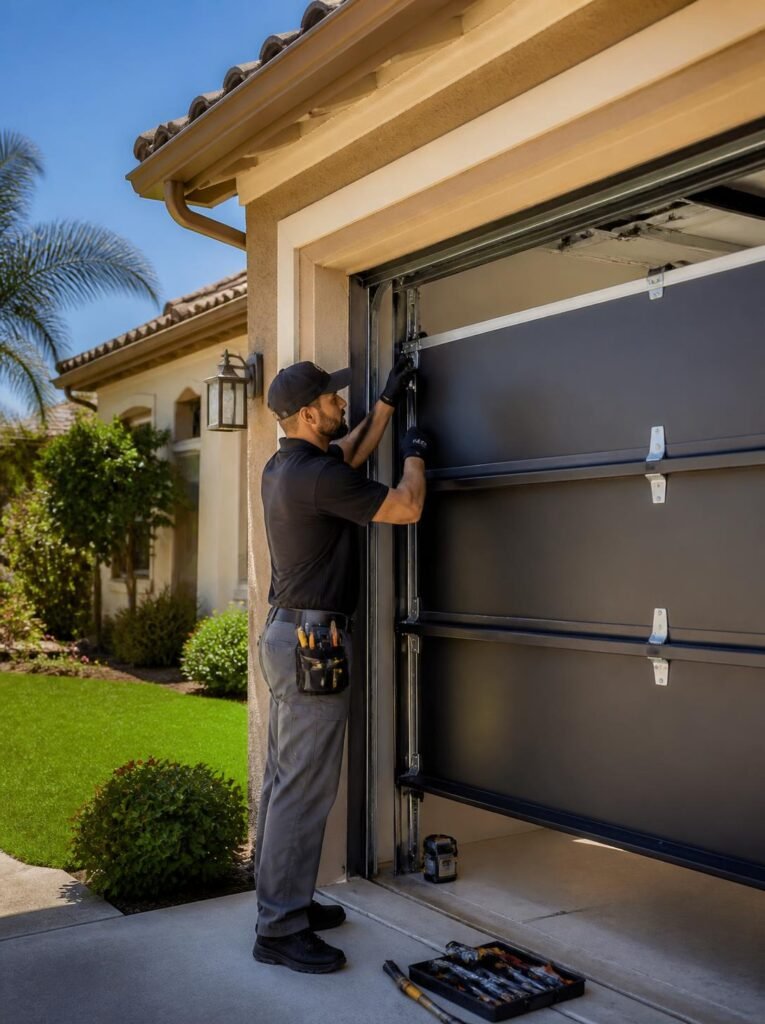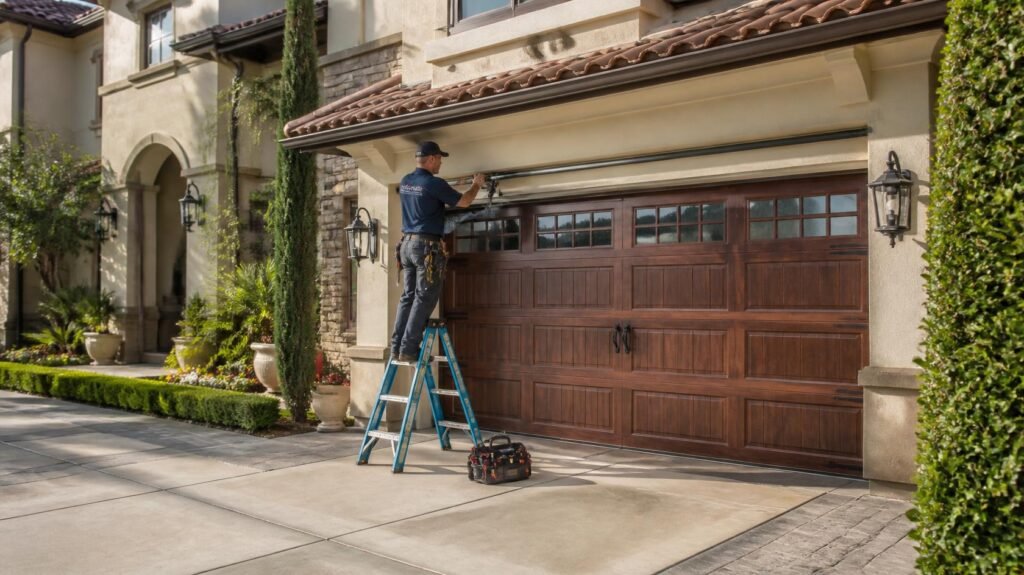
Garage door springs play a critical role in keeping your garage door balanced and allowing it to open and close properly. When a spring breaks or loses its ability to support the door, the door may become extremely heavy, stop moving, or place excessive strain on the opener. Recognizing the warning signs early can help homeowners avoid additional damage and reduce the risk of injury.
Garage Door Spring Repair Sacramento is an important service to consider when a residential garage door becomes difficult to lift, moves unevenly, or shows visible signs of spring failure. Although a broken spring may look like a straightforward mechanical problem, garage door springs store substantial energy and can be dangerous to handle without the proper training and equipment.
This guide explains how garage door springs work, the differences between torsion and extension springs, seven common signs of spring failure, and what homeowners should do when a problem occurs. It also covers repair cost factors, replacement considerations, preventive maintenance, and how to choose a suitable garage door repair provider.
If you suspect a broken spring, the safest first step is to stop operating the door and keep people away from the affected equipment. A qualified technician can inspect the system and determine the appropriate repair.
What Do Garage Door Springs Do?
Garage door springs counterbalance much of the door’s weight, making it possible for the door to move without requiring the opener or a person to lift its full weight.
A residential garage door can be heavy, particularly when it is made from multiple steel sections or other substantial materials. The spring system stores and releases mechanical energy as the door moves, helping balance the load throughout its travel.
Without a functioning counterbalance system, the door may be difficult to lift and can become unsafe to operate.
How garage door springs work
When the door closes, the spring system stores mechanical energy. When the door opens, that energy helps counterbalance the door’s weight.
The exact mechanism depends on the spring design.
Torsion springs use twisting force and are commonly mounted on a shaft above the garage door opening. As the door moves, the springs wind and unwind to provide counterbalancing force.
Extension springs stretch and contract as the door operates. They are generally installed alongside the horizontal tracks and use tension to help counterbalance the door.
Both systems must be appropriately matched to the door’s weight and configuration.
How springs work with the rest of the door system
Garage door springs do not operate independently. They work with several other components.
- Lift cables: Transfer force through the lifting system to help raise and lower the door.
- Drums or pulleys: Guide the cables, depending on the spring system’s design.
- Tracks and rollers: Guide the door along its intended path.
- Garage door opener: Provides powered movement while relying on the counterbalance system to reduce the load it must lift.
- Safety systems: Help protect people and property during automatic operation.
A problem with one component can affect others. For example, a broken spring can place excessive strain on the opener, while a damaged cable may cause the door to become uneven.
This is why a proper inspection should consider the overall condition of the door system rather than focusing exclusively on the visibly damaged spring.
Torsion Springs vs. Extension Springs
Understanding the difference between torsion and extension springs helps explain why spring repairs require different procedures and replacement parts.
Torsion springs
Torsion springs are usually mounted horizontally on a metal shaft above the garage door opening. They twist as the door moves, storing and releasing energy to help balance the door.
Many residential garage doors use one or more torsion springs, depending on the door’s design and weight.
Common warning signs of a torsion spring problem include a visible gap in the spring coil, a loud bang from the garage, or a door that suddenly becomes difficult to lift.
A broken torsion spring may leave the door unable to open normally, even when the opener is functioning.
Torsion springs are under substantial tension. Winding, unwinding, removing, or adjusting them requires appropriate tools and training. These tasks should not be attempted as a do-it-yourself repair.
Extension springs
Extension springs are typically installed alongside the horizontal tracks. They stretch when the door closes and contract as the door opens.
These springs help counterbalance the door through their extension and contraction.
A damaged extension spring may show visible deformation, stretching, separation, or other signs of wear. The door may also move unevenly or become difficult to operate.
Extension spring systems should include appropriate safety cables where required by their design and applicable guidance. A safety cable can help contain a broken extension spring, but it does not eliminate the risk associated with a spring failure.
Do not remove or adjust extension springs yourself.
Comparing the two spring systems
| Feature | Torsion springs | Extension springs |
|---|---|---|
| Typical location | Above the door opening on a shaft | Alongside the horizontal tracks |
| How they work | Twist to store and release energy | Stretch and contract to store and release energy |
| Common failure sign | Visible gap in the spring coil | Visible damage or separation in the spring |
| Possible door symptoms | Door becomes heavy or will not lift normally | Door may become unbalanced or move unevenly |
| Repair requirements | Specialized tools and spring-tension procedures | Specialized handling of tensioned spring components |
| Recommended response | Stop operating the door and arrange professional service | Stop operating the door and arrange professional service |
The spring type alone does not determine the exact repair. A technician must consider the door’s weight, dimensions, hardware, configuration, and existing spring specifications.
Seven Signs of a Broken or Failing Garage Door Spring
A garage door spring can fail suddenly or show warning signs before it breaks. The following symptoms can help you recognize when the system needs professional attention.
Not every symptom confirms spring failure, so an inspection may be needed to determine the actual cause.
1. You Hear a Loud Bang From the Garage
A sudden, loud bang can be one of the first signs that a garage door spring has broken.
The sound may resemble a heavy object striking the floor or a sharp pop from the garage. Because a spring stores mechanical energy, a failure can produce a noticeable noise.
However, the sound alone does not prove that the spring is responsible. Other components can also produce loud noises.
After hearing an unexpected bang, do not immediately activate the garage door opener to see whether the door still works.
Instead, keep people away from the door and look for obvious signs of damage from a safe position. If you notice a gap in a spring or the door no longer operates normally, arrange professional inspection.
2. Your Garage Door Will Not Open
A broken spring can prevent the garage door from opening normally because the opener can no longer rely on the intended counterbalance.
You may notice that the motor runs briefly before stopping, the door rises only a short distance, or the door does not move at all.
Some openers have protective features that stop operation when the system encounters excessive resistance. Others may attempt to move the door without being able to lift it safely.
Do not repeatedly press the remote or wall control. Continuing to operate the opener can damage the drive mechanism or other components.
A technician can inspect the spring system, cables, opener, and related hardware to determine why the door will not open.
3. You Can See a Gap in the Spring
A visible gap in a torsion spring is a common indication that the spring has broken.
The spring may look like two separate sections rather than one continuous coil. In some cases, the break is easy to see from a safe position above the door opening.
Do not touch the spring or attempt to move its components to confirm the break.
With extension springs, damage may appear as a separated or deformed coil, but the exact appearance depends on the failure and spring design.
If you suspect a broken spring, stop using the door and arrange professional service.
4. The Garage Door Suddenly Feels Extremely Heavy
A properly functioning spring system counterbalances much of the door’s weight. When a spring breaks, the door may become substantially harder to lift.
This symptom is especially noticeable when a person attempts to operate the door manually, although manually testing a door with suspected spring failure is not recommended.
A door that suddenly feels unusually heavy may also have another mechanical problem. The important point is that abnormal weight can indicate that the counterbalance system is no longer functioning properly.
Do not try to compensate by pulling harder or asking another person to help lift the door. A heavy door can fall unexpectedly.
Keep the door stationary and contact a professional.
5. Your Garage Door Opens Only a Few Inches
If a garage door begins to open but stops after moving only a short distance, a broken spring may be responsible.
The opener may be unable to lift the door because the counterbalance system is no longer supporting its weight as intended.
However, this symptom can also result from a mechanical obstruction, damaged cables, a faulty opener, or another problem.
Avoid repeatedly restarting the door. If the spring is broken, further attempts may place unnecessary strain on the opener.
A professional inspection can distinguish spring failure from other causes of restricted movement.
6. The Door Looks Crooked or Moves Unevenly
A garage door that hangs unevenly may have a cable, spring, track, or roller problem.
If one side rises higher than the other, the door may be experiencing an imbalance in its lifting system. A damaged cable or spring can prevent the door from moving evenly.
This is particularly concerning because a crooked door may become unstable or come out of its intended path.
Do not attempt to straighten the door manually, pull on a cable, or force the opener to complete its cycle.
Stop operating the door and arrange professional inspection.
7. Your Garage Door Opener Struggles or Stops Unexpectedly
A garage door opener is designed to move a properly balanced door. When a spring fails, the opener may experience excessive resistance.
Possible symptoms include:
- The motor runs but the door barely moves.
- The opener stops shortly after starting.
- The door reverses or behaves differently from normal.
- The opener makes unusual sounds during an attempted lift.
- The door cannot complete its normal opening cycle.
These symptoms do not automatically mean the opener is defective. The motor may be responding to a broken spring or another mechanical fault.
Do not increase the opener’s force settings to overcome the problem. The counterbalance system should be inspected and repaired before the opener is returned to normal use.
For related issues, visit the Garage Door Opener Repair Sacramento service page.
Garage Door Spring Problems: Symptoms and Recommended Actions
Use this table to understand common warning signs and determine the safest next step.
| Symptom | Possible explanation | Recommended next step |
|---|---|---|
| Loud bang from the garage | Broken spring or another mechanical failure | Stop operating the door and arrange inspection |
| Visible gap in a torsion spring | Broken torsion spring | Keep clear of the spring and request professional repair |
| Door will not open | Broken spring, cable issue, obstruction, or opener fault | Do not force the door; arrange diagnosis |
| Door becomes unusually heavy | Counterbalance failure or another mechanical problem | Do not attempt to lift it manually |
| Door opens only a few inches | Spring failure, resistance, or opener protection | Stop repeated operation and seek service |
| Door hangs crooked | Cable, spring, track, or roller problem | Keep people clear and do not straighten it yourself |
| Opener strains or stops | Excessive door resistance or an opener fault | Stop using the opener and request inspection |
| Visible cable damage | Fraying, displacement, or cable failure | Do not touch or operate the door |
| Door closes unevenly | Imbalance, track damage, or lifting-system problem | Stop operation if the door is unstable |
| Repeated mechanical failures | Wear, incorrect parts, or an unresolved underlying fault | Request a comprehensive system inspection |
These are general troubleshooting indicators, not confirmed diagnoses. A qualified technician should determine the actual cause before recommending a repair.
Why Does a Garage Door Become Heavy, Crooked, or Unable to Open?
Spring failure is a common explanation for a garage door that becomes unusually heavy, but it is not the only possible cause.
Understanding the relationship between springs and other components helps explain why a complete inspection matters.
Broken or weakened springs
Springs gradually experience wear through repeated operation. Over time, fatigue can reduce their ability to function correctly, and a spring may eventually break.
When this happens, the door loses some or all of the intended counterbalance. The opener may struggle, and the door may become difficult to control.
Damaged lifting cables
Cables transfer force through the lifting system. If a cable breaks, frays, or comes out of its intended position, the door may hang unevenly or become unstable.
Cable damage can occur alongside spring failure, so both components should be evaluated.
Never attempt to pull a damaged cable back into place. Cable systems may remain under significant tension.
Track and roller problems
Tracks guide the door as it moves, while rollers help it travel through the track system.
A bent track, damaged roller, or obstruction can create resistance even when the springs are functioning correctly.
Forcing the door through a mechanical obstruction may cause additional damage.
Garage door opener problems
An opener can experience electrical or mechanical faults independent of the springs.
For example, a damaged drive mechanism may prevent the door from moving even when the counterbalance system is intact.
A proper diagnosis should distinguish a failed opener from a door that the opener cannot lift because of spring failure.
Incorrect spring specifications
Springs must be appropriate for the door’s weight and configuration. A replacement spring that is not correctly matched to the system can result in poor balance or unreliable operation.
Spring selection should account for the door’s specifications and the manufacturer’s requirements rather than relying solely on visual similarity.
What Should You Do If Your Garage Door Spring Breaks?
If you suspect a broken garage door spring, focus on safety rather than trying to get the door working again immediately.
Step 1: Stop using the garage door opener
Do not continue pressing the remote or wall control. Repeated operation may strain the opener and other components.
If the door is already open or partially open, do not attempt to lower it manually.
Step 2: Keep people and pets away
A door with a failed spring may move unexpectedly. Keep children, pets, and other people away from the opening and surrounding equipment.
Do not stand underneath a door that may be unsupported.
Step 3: Do not touch the spring or cables
Avoid touching spring coils, winding components, lift cables, bottom brackets, or other tensioned hardware.
Even when a door appears stationary, parts of the lifting system may remain under substantial mechanical tension.
Step 4: Observe the problem from a safe position
If it is safe to do so, note any visible spring gap, damaged cable, uneven door position, or unusual noise.
You do not need to touch the equipment or dismantle anything to provide useful information to a repair provider.
Step 5: Contact a qualified garage door repair professional
Explain the symptoms and tell the provider whether the door is open, closed, or partially open.
Mention any suspected spring failure, cable damage, or uneven movement. This helps the provider understand the potential hazards before arriving.
For service information, visit the Garage Door Spring Repair Sacramento page.
Step 6: Follow the technician’s safety instructions
Keep the affected area clear until the system has been assessed. Do not attempt to release the opener, disconnect hardware, or move the door unless a qualified professional has confirmed that the procedure is safe for your specific situation.
Why Garage Door Spring Repair Is Dangerous
Garage door springs store mechanical energy that is released as the door moves. If a spring is mishandled, that energy can cause sudden movement or forceful movement of tools and components.
The risks extend beyond the spring itself. Cables, brackets, drums, and other connected components may also be under tension or supporting the weight of the door.
Torsion spring hazards
Torsion springs are wound around a shaft and require specialized procedures for installation and adjustment.
Attempting to wind or unwind a spring without appropriate training and tools can result in severe injuries. A tool that slips or a spring that releases unexpectedly can strike the person performing the repair.
Never use improvised tools or attempt to adjust spring tension based on a video or generic instructions.
Extension spring hazards
Extension springs stretch during operation and can release stored energy if they fail or are improperly removed.
The associated cables and attachment points also require appropriate handling. A safety cable, where fitted, does not make DIY spring replacement safe.
Cable and bottom-bracket hazards
Lift cables and bottom brackets are important parts of the counterbalance system. Removing or loosening these components without properly securing the door can cause sudden movement.
Do not loosen bottom brackets, remove cables, or attempt to support a heavy door with improvised equipment.
Why professional service matters
A qualified technician can evaluate the spring system, select suitable replacement components, and carry out the work using appropriate tools and procedures.
The technician should also inspect related components and verify that the door is appropriately balanced and operating safely before returning it to normal use.
The safest approach for homeowners is to recognize the problem, stop operating the door, and arrange professional assessment.
Why You Should Not Force the Opener to Lift a Door With a Broken Spring
Garage door openers provide powered movement, but they are not intended to replace the counterbalance function of the spring system.
When a spring breaks, the opener may be unable to lift the door safely. Continuing to operate it can create additional problems.
Excessive strain on the opener
A properly balanced door requires less lifting force than an unbalanced door.
When the spring system fails, the opener may experience excessive load. Depending on the system, this can damage the motor, drive gears, trolley, or other components.
Risk of sudden movement
A door with a broken spring or damaged cable may move unexpectedly. The door could stop, shift, or become unstable during operation.
Repeatedly activating the opener does not make the door safer.
Additional repair costs
If the opener is damaged while attempting to lift a door with a failed spring, the repair may involve more than the original spring problem.
It is generally better to stop using the door and have the entire system inspected.
Do not change the force settings to compensate
Increasing the opener’s force settings may mask the underlying issue or interfere with the intended safety behavior of the system.
Force settings are not a substitute for a functioning spring system. The mechanical problem should be corrected before normal operation resumes.
If the opener is also malfunctioning, a technician can determine whether it needs a separate repair.
Factors That Affect Garage Door Spring Repair Costs
Garage door spring repair costs vary according to the door, spring system, replacement parts, and work required. An accurate quote depends on the specific equipment and the condition of the connected components.
Rather than relying on a generic price, ask for an estimate based on the actual problem.
1. Type of spring system
Torsion and extension spring systems use different components and repair procedures.
The number of springs and the configuration of the door may also affect the work involved.
2. Door size and weight
A heavier or larger door may require a different spring specification from a smaller residential door.
Spring selection must be based on the door’s requirements, not simply on the dimensions of the existing spring.
3. Number of springs requiring replacement
Some doors use multiple springs. If one spring breaks, the technician may recommend replacing another spring as well, depending on its condition, age, compatibility, and the manufacturer’s guidance.
Ask why a particular replacement recommendation is appropriate for your door.
4. Condition of cables and related hardware
A spring failure may occur alongside damage to cables, drums, bearings, rollers, or other components.
If related parts are damaged or worn, the repair may involve additional work.
5. Parts availability
Compatible replacement springs and related hardware must be available for the specific door system.
Older or unusual systems may require additional work to identify suitable parts.
6. Labor and access requirements
The complexity of the spring system, the condition of the door, and the accessibility of the equipment can affect labor requirements.
A door that is stuck, crooked, or partially open may require additional precautions before repairs can begin.
7. Appointment timing
Pricing may differ according to the provider’s scheduling and whether the requested visit falls outside normal working hours.
Ask about any emergency or after-hours charges before authorizing work.
8. Additional opener repairs
If continued operation has damaged the opener or another component, the total repair may involve more than spring replacement.
A written estimate should distinguish the spring work from any additional repairs.
What should a spring repair estimate include?
Ask the provider to explain:
- The diagnosed problem.
- The recommended replacement parts.
- Labor and any additional charges.
- Whether related cables and hardware require attention.
- Any warranty terms that apply.
- Whether additional work will require your approval.
BMS Automatic Gates and Garage Doors can be contacted to discuss a suspected spring problem and request an estimate. Actual pricing and service availability should be confirmed directly with the company.
Garage Door Spring Repair or Full Door Replacement?
A broken spring does not automatically mean you need a new garage door. In many cases, spring replacement may restore proper operation if the rest of the system remains in suitable condition.
However, the decision should account for the overall state of the door, opener, and supporting hardware.
When spring replacement may be appropriate
Repair may be suitable when:
- The door panels remain structurally sound.
- The track and roller system is in good condition.
- Compatible replacement springs are available.
- The opener and related hardware remain serviceable.
- The problem is limited to the spring or a small number of related components.
A technician should confirm that the door can be safely restored to normal operation.
When replacing the garage door may be worth considering
Replacement may be worth evaluating when the door has extensive structural damage, severe deterioration, repeated mechanical failures, or parts that are difficult to source.
A new door may also make sense if the existing design no longer meets your needs for appearance, insulation, or daily use.
However, a single broken spring is not sufficient evidence that the entire door needs replacement.
Repair versus replacement comparison
| Consideration | Spring repair | Door replacement |
|---|---|---|
| Door structure | Existing door remains sound | Door has extensive damage or deterioration |
| Nature of the fault | Spring or limited related components have failed | Multiple major problems affect the overall system |
| Parts availability | Compatible spring components are available | Essential components are unavailable or impractical to source |
| Upfront expense | Often lower for an isolated spring problem | Generally involves a larger investment |
| Long-term needs | Existing door continues to meet requirements | Owner wants a broader upgrade or the existing door is no longer suitable |
For installation information, visit the Garage Door Installation Sacramento service page.
How to Choose a Garage Door Spring Repair Technician
Because spring systems are potentially dangerous, selecting a suitable repair provider is an important part of the process.
A good service experience should include a clear diagnosis, an explanation of the proposed repair, and appropriate safety checks.
Ask about relevant experience
Ask whether the provider works with your type of garage door and spring system. If possible, provide the door and opener manufacturer or model.
Request an explanation of the diagnosis
Ask how the technician determined that the spring has failed and whether any other components need attention.
A broken spring may be the primary problem, but damaged cables or an overloaded opener can also require inspection.
Get a written estimate
Ask for a written breakdown of the proposed work, parts, labor, and any additional charges.
If the technician recommends replacing more than the spring, ask for an explanation of why the additional work is necessary.
Confirm the replacement parts are appropriate
Springs need to match the requirements of the door system. Ask whether the replacement components are compatible and whether the technician is following the manufacturer’s specifications.
Ask about warranty terms
If the provider offers a warranty, request the terms in writing. Clarify which parts and labor are covered and whether any exclusions apply.
Do not assume that every repair comes with the same warranty.
Verify qualifications and insurance
Ask about relevant training, experience, and insurance. Check any licensing requirements that apply to the work.
Avoid relying solely on advertising claims or the lowest quoted price.
Confirm post-repair testing
Ask whether the technician will inspect related hardware, verify the door’s balance, and test normal operation and applicable safety systems according to the manufacturer’s instructions.
Understand service availability
If your door is stuck open or creating a safety issue, explain the situation and ask when the company can inspect it.
Confirm any emergency or after-hours fees rather than assuming immediate service is available.
For information about BMS Automatic Gates and Garage Doors, visit the About Us page or Contact Us page.
Garage Door Spring Maintenance: How to Recognize Problems Early
Routine observation can help homeowners notice changes in garage door operation before a more serious problem develops. However, maintenance cannot prevent every spring failure.
Springs experience wear through repeated use, and their service life depends on factors such as design, usage, door weight, and operating conditions.
Observe how the door moves
Pay attention to changes in opening speed, unusual noises, jerking, or uneven movement.
A change in operation does not automatically mean the spring is failing, but it is a reason to investigate rather than ignore the symptom.
Look for visible signs of damage
From a safe position, look for a gap in a torsion spring, visible damage to extension springs, or signs that the door is hanging unevenly.
Do not touch spring components or attempt to inspect them by moving the door manually.
Keep the tracks clear
Remove ordinary debris from accessible areas of the garage door’s path when the door is stationary and the task can be performed safely.
Do not reach into moving parts or attempt to straighten a damaged track.
Follow the manufacturer’s lubrication guidance
Different garage door components have different maintenance requirements. Use the products and procedures recommended by the manufacturer.
Do not assume that every spring, roller, track, or hinge should be lubricated in the same way. Lubrication also cannot repair a broken or structurally damaged component.
Observe the opener’s behavior
If the opener begins struggling, stopping unexpectedly, or making unusual sounds, stop operating the door if spring failure or mechanical resistance is suspected.
Do not increase force settings to compensate for an unbalanced door.
Schedule professional maintenance when appropriate
A qualified technician can inspect the springs, cables, rollers, tracks, and related hardware when abnormal operation is noticed or maintenance is recommended by the manufacturer.
For additional repair information, visit the Garage Door Repair Sacramento service page.
Frequently Asked Questions About Garage Door Spring Repair
1. How do I know if my garage door spring is broken?
Common signs include a loud bang, a visible gap in a torsion spring, a door that becomes unusually heavy, or an opener that cannot lift the door normally. Uneven movement and damaged cables may also indicate a problem. Stop operating the door and arrange professional inspection.
2. Can I open my garage door with a broken spring?
You should not attempt to operate a garage door when a broken spring is suspected. The door may be extremely heavy or unstable, and the opener may not be able to lift it safely. Keep people away and contact a qualified technician.
3. Can I replace a garage door spring myself?
Garage door spring replacement is not a suitable DIY task for an untrained homeowner. Torsion and extension springs store mechanical energy and can cause serious injuries if handled incorrectly. Professional repair is the safer option.
4. Should both garage door springs be replaced if one breaks?
It depends on the system and the condition of the remaining spring. If both springs are part of the same system and have similar wear, a technician may recommend replacing them together. Ask for an explanation based on the door’s specifications, component condition, and manufacturer’s guidance.
5. Why does my garage door opener struggle after a spring breaks?
The spring system counterbalances much of the door’s weight. When a spring breaks, the opener may face excessive resistance and be unable to lift the door safely. Repeated operation can damage the opener or other components.
6. How much does garage door spring repair cost in Sacramento?
The cost depends on the spring type, door size and weight, number of springs, replacement-part availability, labor, and the condition of related components. Request a written estimate based on an inspection rather than relying on an unsupported price range.
7. How long do garage door springs last?
Spring life varies according to the spring design, rated cycle life, door weight, installation, and frequency of use. The number of daily opening and closing cycles affects how quickly a spring accumulates wear. Follow the manufacturer’s maintenance recommendations and arrange inspection when symptoms appear.
8. Can a broken spring damage my garage door opener?
Yes. If the opener is repeatedly used to lift a door that is no longer properly counterbalanced, the motor or drive components may be subjected to excessive strain. Stop operating the door if spring failure is suspected.
9. Is a broken garage door spring an emergency?
A broken spring requires prompt attention because the door may be unsafe to operate. The urgency depends on the door’s position, stability, access needs, and whether it creates an immediate hazard. Keep people away from the door and ask the repair provider about suitable service availability.
10. What should I do while waiting for spring repair?
Stop using the opener, keep children and pets away, and do not touch the springs or cables. Avoid standing beneath a door that may be unsupported. Tell the repair provider what happened and whether the door is open, closed, or partially open.
Summary: Recognize Spring Failure and Put Safety First
Garage door springs help counterbalance the door’s weight, making normal opening and closing possible. When a spring breaks or fails to function correctly, the door may become heavy, crooked, noisy, or unable to open.
The most important warning signs include:
- A sudden, loud bang from the garage.
- A visible gap in a torsion spring.
- A door that will not open normally.
- A door that becomes unusually heavy.
- A door that opens only a short distance.
- Uneven movement or a visibly crooked door.
- An opener that strains or stops unexpectedly.
These symptoms can also have other causes, so a professional inspection may be necessary to confirm the problem.
Remember these essential safety practices:
- Do not wind, unwind, remove, or adjust torsion springs.
- Do not attempt to repair high-tension cables or loosen spring-related brackets.
- Do not repeatedly operate the opener to force a damaged door to move.
- Do not stand beneath a door that may be unsupported.
- Keep children and pets away from damaged garage door equipment.
- Request a clear diagnosis and written estimate before authorizing repair work.
Spring replacement may be sufficient when the door and its other components remain in good condition. If the door has extensive damage or repeated mechanical problems, a broader repair-versus-replacement assessment may be appropriate.
The safest approach is to recognize the symptoms early, avoid risky DIY repairs, and seek qualified help when spring failure is suspected.
Need Garage Door Spring Repair in Sacramento, CA?
A broken or failing garage door spring can leave your door difficult to operate and potentially unsafe. Getting the system inspected can help identify the cause, determine which components need attention, and establish the appropriate repair options.
BMS Automatic Gates and Garage Doors is a local contact for Sacramento homeowners seeking information about garage door spring problems and repair estimates.
If your garage door has become unusually heavy, will not open properly, or shows signs of spring or cable damage, explain the symptoms and ask about the next steps.